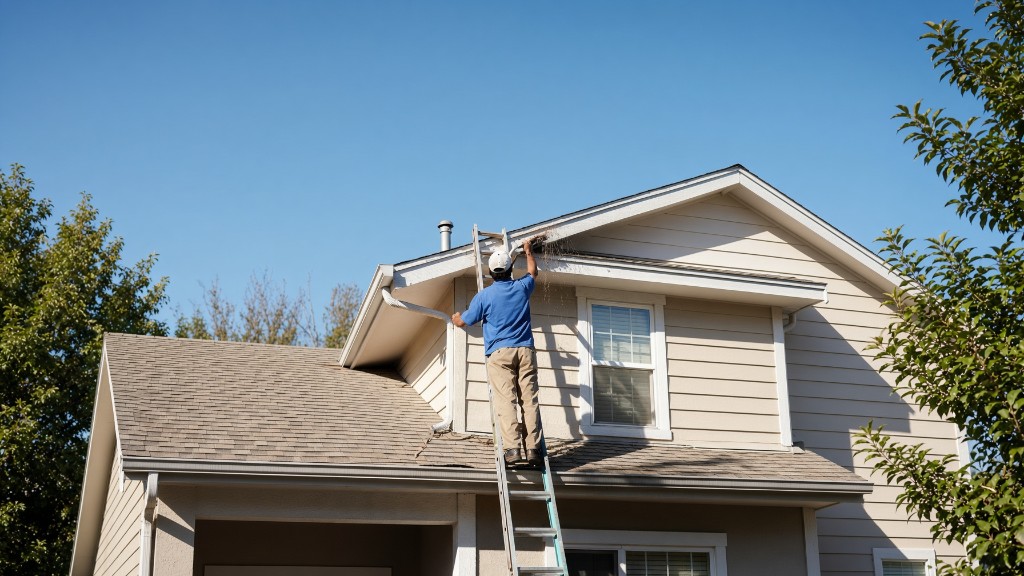
How to Start a Gutter Cleaning Business: A Step-by-Step Guide
Gutter cleaning is one of the best service businesses you can start on a small budget. Every house with gutters needs them emptied, the work is straightforward once you know the safety rules, and the same customers come back twice a year. You don’t need a storefront, a crew, or a trade license in most places. With a solid ladder, a few tools, and a fast way to quote, you can be taking on paying work within days.
This guide walks through everything it takes to start a gutter cleaning business the right way, from the gear and the legal setup to pricing your jobs and landing your first customers.
1. Decide if gutter cleaning is right for you
Before you spend a dollar, be honest about the day-to-day. This is outdoor work on a ladder. You’ll be reaching, scooping, and flushing in heat, rain, and cold, often two stories up. The season matters a lot: in most of the country, fall is packed and spring is a solid second wave, while midsummer and deep winter slow down. You need a plan for that cash-flow gap, or a second service to fill it.
The calendar is the business. Market in August. Book September through November as hard as you can. Spring (March–April in a lot of markets) is the second season, when seed pods, pollen, and leftover winter debris clog downspouts. January is for equipment, insurance, and reaching out to last fall’s list — not for hoping walk-up work appears.
The upside is real. Startup costs are among the lowest in home services, every neighborhood is a market, and the work is naturally recurring. Homeowners forget they need this until the first overflow stains the siding, which means the operator who quotes fast during the rush fills a calendar while everyone else is still returning calls. If you’re comfortable with heights, careful about safety, and want a business you can start lean and grow, gutter cleaning is hard to beat.
A lot of operators pair it with pressure washing or window cleaning. Same neighborhoods, same seasonal timing, one trip for a bigger ticket.
2. Learn the job before you take money
This is the one technical thing to get right, because the risk isn’t a bad review, it’s a fall or a damaged roof.
Cleaning means scooping and flushing. Pulling leaves out of the trough is only half the job. If you don’t run water through every downspout until it flows freely at the bottom, the gutter will overflow on the next storm and the customer will call you back unpaid. Clogged elbows and buried outlets are the usual surprise on a job you quoted from a photo, so treat downspout clearing as included, not a “if I have time” extra.
A standard clean should say, in writing, what it includes. Scoop every trough, flush every downspout until water exits at grade, haul the debris, and spot-check for loose hangers or obvious damage. It does not include repairs, gutter-guard installation, fascia work, or walking the roof. Write that scope on the quote so “while you’re up there” doesn’t become free labor.
Height and pitch decide the method. One-story ranch homes are a ladder and a scoop. Two-story homes need a taller extension ladder, a standoff that keeps the rails off the gutter, and a hard rule about when you walk away. Steep roofs, rotten fascia, and icy or high-wind days are not “charge more” jobs when you’re new. They’re no-jobs until you have the gear and the experience.
Work the ladder, not the shingles. Set the ladder at roughly a 4:1 angle (one foot out for every four feet of height), use a standoff so the top doesn’t crush the gutter, and don’t overreach — climb down and move the ladder. Stepping onto the roof to save a setup is how people crack granules, leave footprints, and eat a repair bill. If a section isn’t reachable from the ladder, say so in the quote or skip the house.
When you find damage, stop and show it. Soft fascia, pulled hangers, standing water that won’t drain, or a downspout that’s pulled off the house are not things you silently “fix” or ignore. Photograph them, show the customer, and either send a change order for repair work you actually do, or tell them they need a gutter installer. Pretending a rotten board is fine is how a cleaning job becomes a leak claim.
Gutter guards change the work. Some screens pop off and clean easily. Micro-mesh and some helmet-style covers are a fight, or they’re not serviceable from a ladder at all. Ask before you quote: guards or no, and what kind if they know. Price guarded gutters as their own template, or walk away if you can’t service them safely.
Learn this on a friend’s house or two before you take paid work. A damaged downspout, a bent hanger, or a fall on day three is a much more expensive education.
3. Handle the legal setup
Get legitimate before you take paid work. The basics most gutter cleaning operators need:
- Business structure. Forming an LLC separates your personal assets from the business and makes you look more credible to customers. It’s inexpensive and worth doing early.
- Business license. Most cities and counties require a general business license. Check your local requirements.
- Insurance. General liability is not optional. You’re on a ladder next to people’s homes, cars, gardens, and windows. One bent gutter run, cracked skylight, or injury without coverage can wipe out a season. Read the policy: some general-liability policies exclude roof work or work above a certain height, which is exactly what you do. Commercial auto for the work vehicle matters too.
- Disposal. Gutters produce wet leaves, shingle grit, and sometimes pine straw by the bucket. Know where you’re dumping it. Some landfills and transfer stations take yard waste cheap; some HOAs will not let you leave piles at the curb. Haul it. Leaving a wet heap in the hostas is how you don’t get called back in the spring.
Getting this in place early isn’t just red tape and looking professional, it’s about protecting yourself. If you operate as a sole proprietor and someone is hurt on a job, your personal savings, car, and home can be on the line. Forming an LLC or corporation creates a legal wall between you and the business, so in most cases a claim can only reach the company’s assets, not your personal ones. Pair that structure with liability insurance and you’ve protected yourself twice over. For the broader picture on setting up your operation properly, see setting up your business the right way from day one.
4. Get your equipment
You can start gutter cleaning lean. The essentials:
- An extension ladder and a standoff. This is the purchase that matters. For most one-story work, a 16–20 foot extension ladder is enough. For two-story homes you want something in the 24–28 foot range, rated for your weight plus tools, plus a standoff that holds the top off the gutter. A cheap step ladder is not enough for most houses. If you can’t reach it with what you own, don’t take the job.
- Scoops and a bucket hook. A gutter scoop or trowel, heavy gloves, and a way to hang a bucket so you’re not climbing with a handful of wet leaves.
- A hose and a nozzle. You have to flush. A garden hose from the customer’s spigot is enough on most residential jobs. If the water doesn’t come out the bottom, the job isn’t done — snake the downspout or pull the elbow, don’t just leave it.
- A blower or wet/dry vac. Speeds up dry debris and gets the last grit out of the trough.
- Tarps. Protect landscaping and make cleanup faster. Customers remember the operator who didn’t leave a mess in the flower beds.
- Safety gear. Gloves, eye protection, and non-slip boots. If you add a helper, treat that as a real crew: don’t put an uninsured friend on a two-story ladder. On two-story work, a second person footing the ladder is not a luxury.
- A way to haul debris. Truck, trailer, or bins. Wet leaves are heavy. Plan the dump run into your day, not as an afterthought.
Nice-to-haves as you grow: a gutter vacuum system for two-story work without as much climbing, magnetic bits for downspout screws, and a second ladder so a helper can work the other side. You do not need those on day one.
Budget for ongoing costs too: fuel, dump or yard-waste fees, ladder and hose replacement, vehicle maintenance, and insurance. These are the numbers that determine whether a job is profitable, so know them before you quote. If you want the full pricing math, not just gutter-specific rates, how to price a job so you actually make a profit walks through cost, profit, and markup.
5. Price your gutter cleaning jobs
Pricing is where new operators most often go wrong, so this section matters. Gutter cleaning is usually priced by linear footage, then adjusted for stories, access, and how packed the gutters are.
How to estimate without driving there. Satellite view gives you stories, tree cover, and a rough perimeter. Google Maps’ measure tool along the roofline is close enough for a quote. A typical single-story ranch often runs 120–160 linear feet. A two-story colonial is often 160–220, and the second story is the time, not just the extra trough. Ask four questions with the address: how many stories, gutter guards (yes/no), trees overhanging the roof, and when they were last cleaned. That’s enough to pick a template.
The standard pricing models:
- Per linear foot for the gutter run, with a higher rate on two-story than one-story. Story count is the multiplier that matters most, because it is time and risk, not just more trough. Two-story is commonly 1.5–2× the one-story rate, not “a little more.”
- Flat rate for common, predictable houses: a standard one-story ranch, a typical two-story colonial. Flat rates are easy for customers to say yes to and fast to quote. Build them from footage once, then reuse them.
- Minimum charge so a small garage or a short run still covers the drive, setup, and dump. If the trip isn’t worth doing at $80, don’t price it at $80.
- Bundled packages. Cleaning plus downspout flush (should be included, not a surprise), plus gutter-guard cleaning, plus a house wash. Bundles raise the average ticket and are a natural fit if you also pressure wash.
A worked example so the math is real. Say a one-story, 140 feet, light debris, good access. Drive and setup 20 minutes, on the ladder about an hour, flush and haul 20 minutes, dump on the way home 15. That’s roughly two hours door to door. If your fully loaded hour — fuel, insurance, dump, your pay, wear — is $75, the job has already cost $150 before profit. Price it like a $150 cost plus the profit you actually want to keep, not like “gutters are $99 this week.” The same length on two stories under oaks in November can be three hours and a dump that’s twice as heavy. That is a different job. Same footage, different price.
The costs your price has to cover:
- Time on the ladder. Tree cover, a steep lot, a long ranch, or guarded gutters can double the job. Price the house in front of you, not the empty-gutter fantasy.
- Height and access. Two-story, walk-out basements that add a story on one side, and decks that block ladder placement all slow you down.
- Debris and dump fees. A house under oaks in November is a different job than a new build with no trees.
- Fuel and drive time. Clustering jobs on the same street is how this business actually pays. A one-off twenty minutes across town often doesn’t.
How to research local rates: call a few competitors and ask for ballpark pricing on a one-story and a two-story house, and look at the service pages of established companies in your area. You’ll quickly get a feel for what your market will bear. Don’t copy the cheapest number you hear. Copy the operators who are still in business.
The pricing feedback loop (this is the part most people miss):
Once you’re quoting, your win rate tells you whether your prices are right:
- If you’re winning every single quote, you’re priced too low. Counterintuitive, but true. Some customers will always say no to a fair price. If nobody ever does, you’re leaving money on the table. Raise your prices until you start losing a few jobs.
- If you’re quoting fast and still losing most jobs, you may be priced too high. Speed is a huge advantage, so if you’re first to quote and still not winning, price is the likely culprit. Consider easing down.
- Being a little high and first still wins. A customer who gets a fair, professional quote immediately will usually take it over a slightly cheaper quote that arrives two days later. Speed buys you room to price with confidence.
- Being way too high forces the customer to wait. Price too aggressively and you push the customer to keep shopping, which kills the speed advantage entirely. The goal is to be the easy yes.
- Never price low just to win a job you don’t want. A two-story under heavy trees with no ladder access to one wall is not a loss-leader. Price it for what it’s actually worth to you, and be fine walking away.
One more thing on pricing: when you quote from an address or a photo, sometimes the gutters are packed solid, the downspouts are clogged, or the customer wants the garage and the shed added once you’re there. Don’t eat the difference or pad the final invoice. Handle it with a change order before you do the extra work, which we cover in what to do when a job is bigger than you quoted.
On a typical single-house clean you probably should not collect a deposit. Invoice when you’re done. On an HOA, a property-manager route, or a day you’ve cleared for six houses on one street, a signed quote that holds the date matters more.
6. Set up how you quote and get paid
Here’s the truth nobody tells new gutter cleaners: your biggest disadvantage starting out isn’t your ladder or your prices. It’s credibility. You have no reviews, no reputation, and no track record. The customer has never heard of you, and they’re often comparing you against an established company with wrapped trucks and a fall waitlist.
The single most powerful way to overcome that is to put a professional, clear quote in front of the customer faster than anyone else. Speed and professionalism are the great equalizers, and in this trade they matter twice as much because the season is short. When a homeowner texts you the address and story count and gets back a polished, itemized quote in two minutes that they can sign from their phone, you don’t look like a guy with a ladder. You look like a real business. And more often than not, you win the job before your established competitor has even called back.
This is exactly what QuoteMe is built for. You set up templates for your common jobs once, like a one-story clean, a two-story clean, or a clean-plus-downspout package, and when a job comes in you tap the template, adjust for tree cover, and send a professional quote in under two minutes, from the driveway or between jobs. The customer reviews it and signs digitally, and you’re notified the moment they do. No printing, no waiting, no “let me get back to you.” That speed doesn’t just let you compete with the established players, it lets you outcompete them during the three weeks everyone is searching at once.
There’s a second advantage that compounds as you get more experienced: quoting from an address, story count, and tree cover instead of driving to every house. Satellite view and a couple of customer photos tell you enough for most residential jobs: stories, gutter length in a ballpark, and whether the lot is treed. When you’re brand new, you’ll want to see a few houses in person to calibrate. Once you’ve done enough one-stories and two-stories to trust your numbers, you can quote the whole thing from your phone without ever leaving the shop. The math on this is dramatic in the fall. A site visit can eat an hour of drive time and fuel for a job you might not even win, which quietly caps how many quotes you can send in a day. Remote quoting removes that ceiling: you can respond to ten inquiries in the time a windshield estimate takes one, and because you’re the first professional quote in the customer’s inbox, your conversion rate climbs at the same time your cost per quote drops. You confirm the actual scope when you arrive, and if the downspouts are packed or they want the shed added, you send a change order before you start the extra work.
See how it works for this trade on our quoting app for gutter cleaning page. It’s free to start, there’s no subscription, and you can look professional on your very first job.
7. Get your first customers
With your setup ready, it’s time to get the phone ringing. Start marketing in late summer. The operators who wait until the first storm are already behind.
- Google Business Profile. Set this up first. When someone searches “gutter cleaning near me,” this is what shows up. It’s free and it’s the highest-intent lead source you have. Photos of packed troughs and a clean, flowing downspout do more than a paragraph of copy.
- Before-and-after photos. Shoot every house. The product is invisible once you’re gone; the photo is what sells the next one.
- A page to send people to. You don’t need a website to look professional. A free QuoteMe Business Page gives you one shareable link — for your Google profile, social bios, Marketplace posts, and truck — where customers can see your services and request a quote in seconds. Every request lands in the app as a new lead, ready to quote.
- Facebook Marketplace and local groups. Fall is when people post “anyone know a gutter guy.” Be the person who replies with a price, not a “DM me.”
- Door hangers and neighborhood clustering. When you’re doing a house, offer the neighbors a same-day or next-day price while you’re already on the street. “I’m cleaning 412 right now — I can do yours this afternoon for $X” turns one booking into three and kills the drive time that eats this business.
- Partnerships. Property managers, HOAs, real estate agents, and pressure washers who don’t do gutters all need a reliable cleaner. One HOA with forty units is a better week than forty scattered Facebook leads.
- Book the next visit before you leave. Don’t say “I’ll call you in the spring.” Put it on the quote: next service in March/April, same scope, they’ll get a new quote to sign when the season opens. Do it while you’re still on the property.
8. Turn first jobs into repeat business
A one-time customer is good. A twice-a-year customer is the actual business. Most houses need gutters cleaned in the fall and again in the spring. The customer you win in October is worth far more than a single job if you are the one who texts them in March.
Keep a record of every job: who it was for, one-story or two, tree cover, guards or not, what you charged, and how to reach them. When the season comes around, re-quote from the last job instead of starting from scratch. A useful March text is boring on purpose:
Hi Dana — we cleaned your gutters last October (one-story, no guards). Spring slots are open the week of the 16th. I’ll send the same-scope quote over if you want it.
Recurring quotes in QuoteMe are free after the first occurrence, so you only pay the 1% the first time that customer signs for that work. Every spring and fall after that, the quote costs you nothing. Property managers and HOAs especially will use you again and again if you do good work and make rebooking easy. Your customer list becomes one of the most valuable assets your business owns, which we make the case for in why your customer base is an asset. Track it from day one.
9. Common mistakes to avoid
- Skipping the downspout flush. A clean-looking gutter that still overflows is a callback you won’t get paid for.
- Working two-story without the right ladder, standoff, and a way to foot it. The job is not worth a fall. Walk away or subcontract until you’re set up for it.
- Walking roofs you shouldn’t walk. Damaged shingles become your problem.
- Ignoring rot and pulled hangers. Photograph, tell the customer, don’t silently inherit a leak.
- Underpricing tree-heavy and two-story work. Those houses take longer and carry more risk. Price them that way.
- Waiting until peak season to start quoting. The calendar fills in August and September. Quote while people are thinking about it.
- Not booking the next cleaning. If you don’t, a competitor will.
- Quoting slowly. During the fall rush, every hour you wait to send a quote is an hour your competitor has to lock the date. Speed is your edge, so use it.
The bottom line
Gutter cleaning is one of the most accessible businesses to start: low startup costs, a built-in twice-a-year customer, and a short busy season that rewards the operator who quotes first. Get your legal setup and insurance in place, learn to clean and flush safely from a ladder, price by footage and stories with a healthy margin, and let your win rate fine-tune your numbers over time. Above all, beat the competition to the quote, because when you’re new, speed and professionalism are how you win.
QuoteMe gives you the tools to do exactly that, free to start, with professional quotes and signatures that make you look established from your very first job. Build it right, quote fast, and win the work.
Related articles
How to Start a Lawn Care Business: A Step-by-Step Guide
Lawn care is a route business: low startup costs, weekly customers, and jobs you can quote from lot size alone. Here's how to get set up, price mowing for profit, and lock in a schedule from day one.
How to Start a Pressure Washing Business: A Step-by-Step Guide
Pressure washing is one of the cheapest service businesses to start: low equipment costs, high demand, and you can quote most jobs from square footage alone. Here's how to get set up, price jobs for profit, and win work from day one.
Do Contractors Really Need a Website? An Honest Answer
Most contractors feel guilty about not having a website. Here's the honest truth about whether you actually need one, what really wins jobs, and the simpler page that does the job for free.