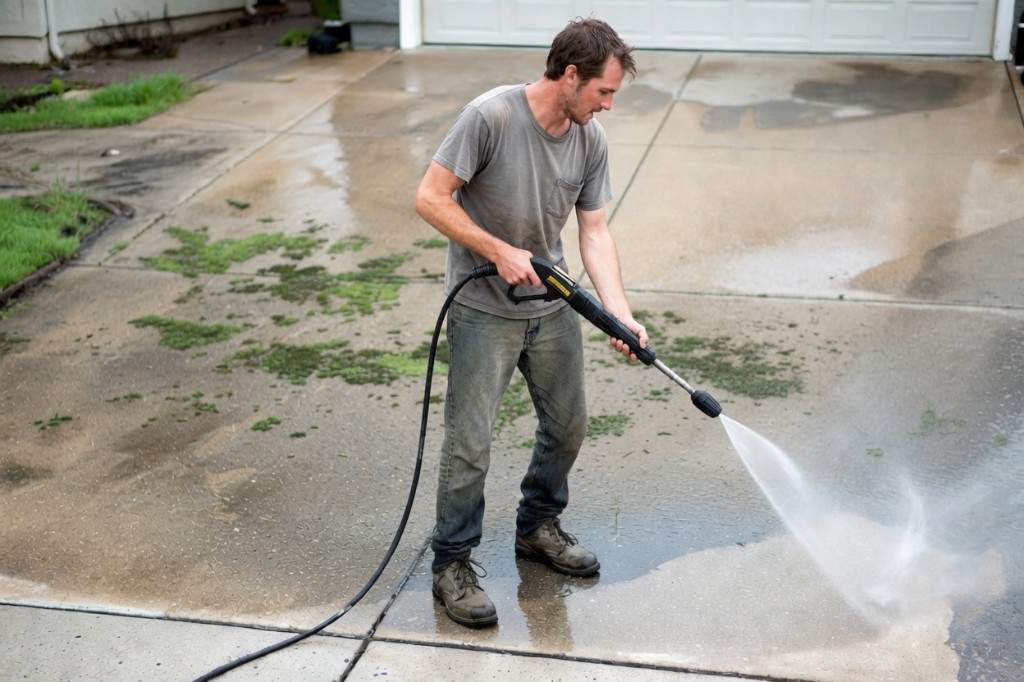
How to Start a Pressure Washing Business: A Step-by-Step Guide
Pressure washing is one of the best service businesses you can start on a small budget. The equipment is affordable, the demand is steady, and the results are instantly satisfying, which makes customers happy to pay and quick to refer you. You don’t need a storefront, a big crew, or a trade license in most places. With a decent machine, a few surfaces to clean, and a fast way to quote, you can be taking on paying work within days.
This guide walks through everything it takes to start a pressure washing business the right way, from the gear and the legal setup to pricing your jobs and landing your first customers.
1. Decide if pressure washing is right for you
Before you spend a dollar, be honest about the day-to-day. Pressure washing is outdoor, physical work. You’ll be on your feet for hours, dragging hoses, climbing ladders, and working in heat and cold. The season matters too: in a lot of markets the work is busiest from spring through fall and slows down in winter, so you’ll want to plan your cash flow around that.
The upside is real, though. Startup costs are low compared to most trades, the demand is broad (every house, driveway, deck, and storefront gets dirty), and the before-and-after results practically sell the next job for you. If you’re comfortable with hands-on outdoor work and want a business you can start lean and grow, pressure washing is hard to beat.
2. Learn the difference between pressure washing and soft washing
This is the one technical thing to understand before you take money, because using the wrong method damages property.
- Pressure washing uses high-pressure water and is right for hard, durable surfaces: concrete driveways, sidewalks, patios, and some masonry.
- Soft washing uses low pressure plus cleaning solutions (typically a diluted sodium hypochlorite mix) to kill mold, algae, and mildew. It’s what you use on roofs, siding, painted surfaces, and anything that high pressure would damage.
Most successful operators do both and know when each applies. Blasting a roof or vinyl siding with high pressure is one of the fastest ways to cause expensive damage and a bad review, so learn the basics before your first paid job.
3. Handle the legal setup
Get legitimate before you take paid work. The basics most pressure washing operators need:
- Business structure. Forming an LLC separates your personal assets from the business and makes you look more credible to customers. It’s inexpensive and worth doing early.
- Business license. Most cities and counties require a general business license. Check your local requirements.
- Insurance. General liability insurance is essential. You’re spraying water and chemicals around people’s homes, cars, and landscaping, and one damaged surface or dead flower bed without coverage can wipe out your profit for the month. Commercial auto insurance for your work vehicle matters too.
- Water and wastewater rules. Some municipalities regulate where your runoff can go, especially the chemicals used in soft washing. Know your local rules on reclaiming or diverting wastewater before you take commercial work, because it can come up on bids.
Getting this in place early isn’t just red tape and looking professional, it’s about protecting yourself. If you operate as a sole proprietor and a customer sues over a damaged roof or an injury on the job, your personal savings, car, and home can be on the line. Forming an LLC or corporation creates a legal wall between you and the business, so in most cases a claim can only reach the company’s assets, not your personal ones. Pair that structure with liability insurance and you’ve protected yourself twice over. For the broader picture on setting up your operation properly, see setting up your business the right way from day one.
4. Get your equipment
You can start pressure washing lean. The essentials:
- A pressure washer. The two numbers that matter are PSI (pressure) and GPM (gallons per minute). GPM is what actually determines how fast you clean, so don’t fixate on PSI alone. A gas unit in the 3,000–4,000 PSI / 4+ GPM range is a common starting point for residential work. You can start with a solid consumer or prosumer machine and upgrade as you grow.
- A surface cleaner. This flat, spinning attachment is what turns a two-hour driveway into a 20-minute driveway with even, streak-free results. It’s one of the highest-return purchases you’ll make.
- Hoses, wands, and nozzles. Extra hose length, a range of spray nozzles for different surfaces, and a quality gun and wand.
- Soft wash setup. A downstream injector or a dedicated soft wash system, plus tanks for mixing your cleaning solution, so you can safely handle roofs and siding.
- Water supply. Know how you’ll get water. Many residential jobs use the customer’s spigot, but a buffer tank helps when supply is weak.
- Safety gear. Chemical-resistant gloves, eye protection, non-slip boots, and appropriate protection when working with soft wash chemicals or on ladders.
Budget for ongoing costs too: fuel, cleaning chemicals, water, vehicle maintenance, equipment wear, and insurance. These are the numbers that determine whether a job is profitable, so know them before you quote.
5. Price your pressure washing jobs
Pricing is where new operators most often go wrong, so this section matters. Pressure washing is usually priced by square footage, though flat rates and bundles are common for standard jobs.
The standard pricing models:
- Per square foot for driveways, patios, and larger flat areas. Establish your rate for concrete, then adjust for other surfaces.
- Flat rate for common, predictable jobs like a standard two-car driveway or a single-story house wash.
- Bundled packages. “House wash + driveway + walkways” priced together. Bundles raise your average ticket and are easy for customers to say yes to.
The costs your price has to cover:
- Chemicals. Soft wash solutions, degreasers, and surfactants are a real per-job cost, especially on heavy algae or oil stains.
- Labor and time. A job with heavy staining, delicate surfaces, ladder work, or a lot of setup and teardown takes longer. Price for the effort, not just the square footage.
- Water and fuel. Factor your water usage and the round trip to the job.
- Equipment wear and maintenance. Pumps, hoses, and engines don’t last forever. Build replacement into your rate.
How to research local rates: call a few competitors and ask for ballpark pricing on common jobs like a driveway or a single-story house wash, and look at the pricing and service pages of established companies in your area. You’ll quickly get a feel for what your market will bear.
The pricing feedback loop (this is the part most people miss):
Once you’re quoting, your win rate tells you whether your prices are right:
- If you’re winning every single quote, you’re priced too low. Counterintuitive, but true. Some customers will always say no to a fair price. If nobody ever does, you’re leaving money on the table. Raise your prices until you start losing a few jobs.
- If you’re quoting fast and still losing most jobs, you may be priced too high. Speed is a huge advantage, so if you’re first to quote and still not winning, price is the likely culprit. Consider easing down.
- Being a little high and first still wins. A customer who gets a fair, professional quote immediately will usually take it over a slightly cheaper quote that arrives two days later. Speed buys you room to price with confidence.
- Being way too high forces the customer to wait. Price too aggressively and you push the customer to keep shopping, which kills the speed advantage entirely. The goal is to be the easy yes.
- Never price low just to win a job you don’t want. A brutal job at a cheap rate is worse than no job. If a filthy, high-risk roof looks like a nightmare, price it for what it’s actually worth to you, and be fine walking away.
One more thing on pricing: when you quote from a photo or square footage, sometimes the job is worse than it looked, or the customer wants the fence and the deck added once you’re there. Don’t eat the difference or pad the final invoice. Handle it with a change order before you do the extra work, which we cover in what to do when a job is bigger than you quoted.
6. Set up how you quote and get paid
Here’s the truth nobody tells new pressure washers: your biggest disadvantage starting out isn’t your machine or your prices. It’s credibility. You have no reviews, no reputation, and no track record. The customer has never heard of you, and they’re often comparing you against an established company with wrapped trucks and hundreds of five-star reviews.
The single most powerful way to overcome that is to put a professional, clear quote in front of the customer faster than anyone else. Speed and professionalism are the great equalizers. When a homeowner texts you the square footage of their driveway and gets back a polished, itemized quote in two minutes that they can sign from their phone, you don’t look like a guy with a pressure washer. You look like a real business. And more often than not, you win the job before your established competitor has even called back.
This is exactly what QuoteMe is built for. You set up templates for your common jobs once, like a house wash, a driveway, or a full bundle, and when a job comes in you tap the template, adjust the price, and send a professional quote in under two minutes, from the driveway or between jobs. The customer reviews it and signs digitally, and you’re notified the moment they do. No printing, no waiting, no “let me get back to you.” That speed doesn’t just let you compete with the established players, it lets you outcompete them.
There’s a second advantage that compounds as you get more experienced: quoting from customer-supplied photos instead of driving to every site. When you’re brand new, you’ll want to see jobs in person to calibrate your pricing. But once you’ve done enough driveways, house washes, and decks to trust your numbers, you can ask the customer to text you a few photos and the square footage, and quote the whole thing from your phone without ever leaving the shop. The math on this is dramatic. A site visit can eat an hour of drive time and fuel for a job you might not even win, which quietly caps how many quotes you can send in a day. Photo-based quoting removes that ceiling: you can respond to ten inquiries in the time a windshield estimate takes one, and because you’re the first professional quote in the customer’s inbox, your conversion rate climbs at the same time your cost per quote drops. Lower cost, higher win rate, more quotes per day, that’s the advantage that lets a solo operator out-hustle a company with a full crew. You confirm the actual scope when you arrive, and if a surface is worse than the photos showed or they want the fence added, you send a change order before you start the extra work.
See how it works for this trade on our quoting app for pressure washing page. It’s free to start, there’s no subscription, and you can look professional on your very first job.
7. Get your first customers
With your setup ready, it’s time to get the phone ringing:
- Google Business Profile. Set this up first. When someone searches “pressure washing near me,” this is what shows up. It’s free and it’s the highest-intent lead source you have.
- Before-and-after photos. No trade sells itself with photos like this one. Shoot a clean before-and-after on every job and post it everywhere. A grimy-then-spotless driveway is the best ad you’ll ever run.
- A page to send people to. You don’t need a website to look professional. A free QuoteMe Business Page gives you one shareable link — for your Google profile, social bios, Marketplace posts, and truck — where customers can see your services and request a quote in seconds. Every request lands in the app as a new lead, ready to quote.
- Facebook Marketplace and local groups. Lots of pressure washing jobs start here. Post your before-and-afters in neighborhood groups and people will come to you.
- Door hangers and neighborhood clustering. When you’re doing a driveway, offer the neighbors a deal. Clustering jobs on the same street cuts your drive time and turns one booking into three.
- Partnerships. Real estate agents, property managers, and HOAs regularly need exteriors cleaned. Build a few relationships and you’ll get steady referral work.
- Referrals. Ask every happy customer to refer you. Word of mouth is the lifeblood of this business.
8. Turn first jobs into repeat business
A one-time customer is good. A repeat customer and a referral source is far better, and pressure washing is naturally recurring. Driveways and house washes get dirty again on a predictable cycle, usually every year or two, so the customer you win today is worth far more than a single job.
Keep a record of every job: who it was for, what you cleaned, what you charged, and how to reach them. When they’re due again, reach out first. Property managers and HOAs especially will use you again and again if you do good work and make rebooking easy. Your customer list becomes one of the most valuable assets your business owns, which we make the case for in why your customer base is an asset. Track it from day one.
9. Common mistakes to avoid
- Using too much pressure on the wrong surface. Etched concrete, gouged wood, and stripped paint mean an angry customer and a repair bill. Learn when to soft wash.
- Skipping insurance. One damaged roof, cracked window, or ruined flower bed can wipe you out. Don’t operate uninsured.
- Underpricing to win. Cheap jobs that barely cover your chemicals, fuel, and time will burn you out fast. Price for profit.
- Ignoring runoff and chemical rules. Especially on commercial work, improper wastewater handling can bring fines. Know your local requirements.
- Quoting slowly. Every hour you wait to send a quote is an hour your competitor has to win the job. Speed is your edge, so use it.
The bottom line
Pressure washing is one of the most accessible businesses to start: low startup costs, steady and recurring demand, and results that sell the next job for you. Get your legal setup and insurance in place, learn the difference between pressure and soft washing, price by square footage with a healthy margin, and let your win rate fine-tune your numbers over time. Above all, beat the competition to the quote, because when you’re new, speed and professionalism are how you win.
QuoteMe gives you the tools to do exactly that, free to start, with professional quotes and signatures that make you look established from your very first job. Build it right, quote fast, and win the work.
Related articles
How to Start a Gutter Cleaning Business: A Step-by-Step Guide
Gutter cleaning is a lean service business with a twice-a-year customer: low startup costs, a sharp fall rush, and jobs you can quote from house size and tree cover. Here's how to get set up, price jobs for profit, and fill a route from day one.
How to Start a Lawn Care Business: A Step-by-Step Guide
Lawn care is a route business: low startup costs, weekly customers, and jobs you can quote from lot size alone. Here's how to get set up, price mowing for profit, and lock in a schedule from day one.
Do Contractors Really Need a Website? An Honest Answer
Most contractors feel guilty about not having a website. Here's the honest truth about whether you actually need one, what really wins jobs, and the simpler page that does the job for free.